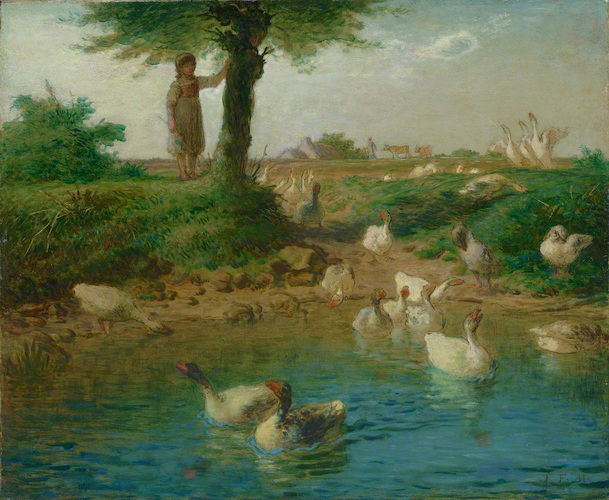
Treasures of Japanese Art from the TFAM Collection
Exhibition period Sunday, January 26 - Sunday, March 22, 1992
Kunstlerhaus (Vienna, Austria)
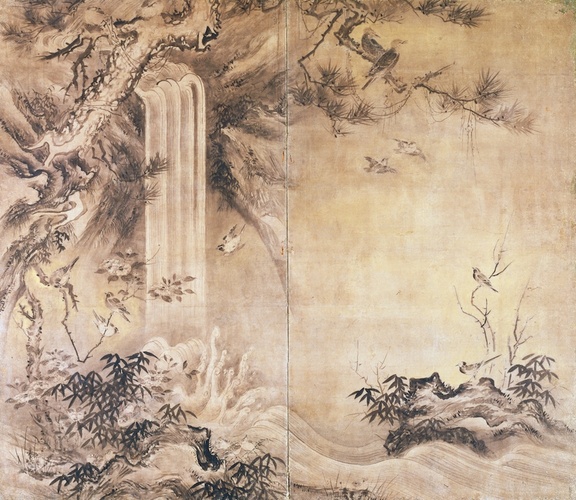
Attributed to Kano Eitoku (1543-1590) Folding Screen with Design of Birds and Waterfall
Momoyama Period (16th c.)
Ink on paper, two-fold screen
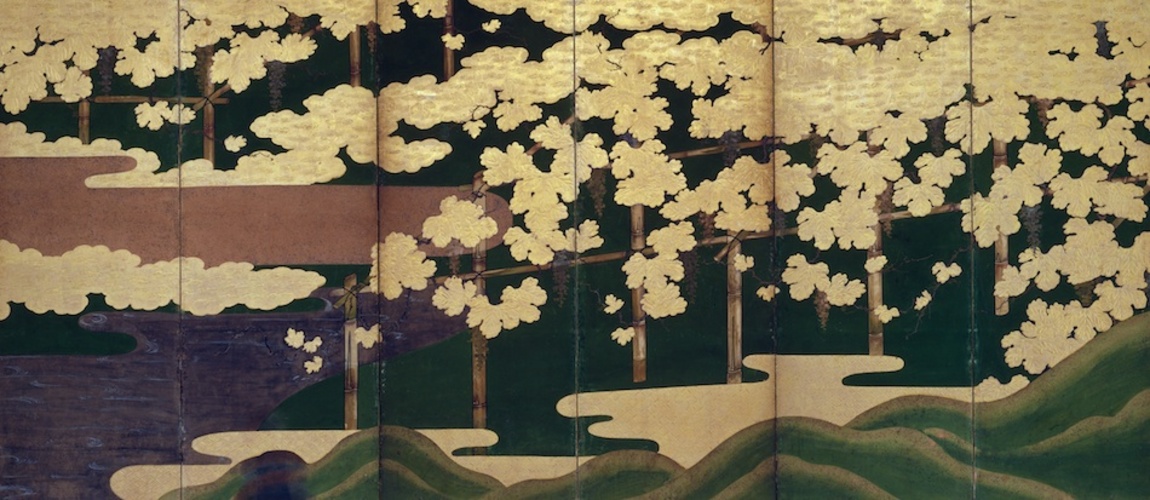
Kano School Folding Screen with Design of Grape Arbor
Momoyama Period (16th c.)
Color on gold-leaf paper, pair of six-fold screens
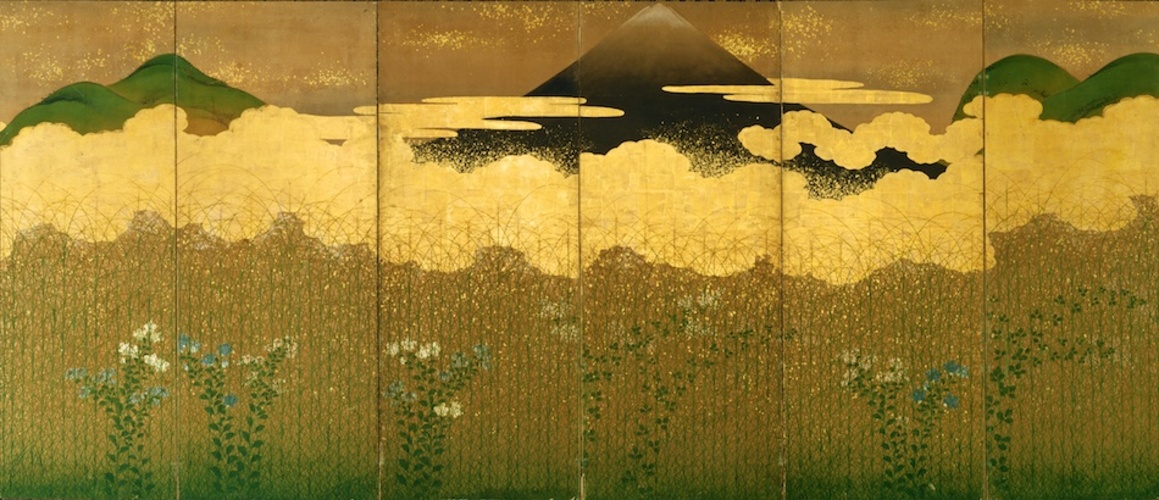
Artist Unknown Folding Screen with Design of Musashino Plain
Early Edo Period (17th c.)
Color on gold-leaf paper, pair of six-fold screens
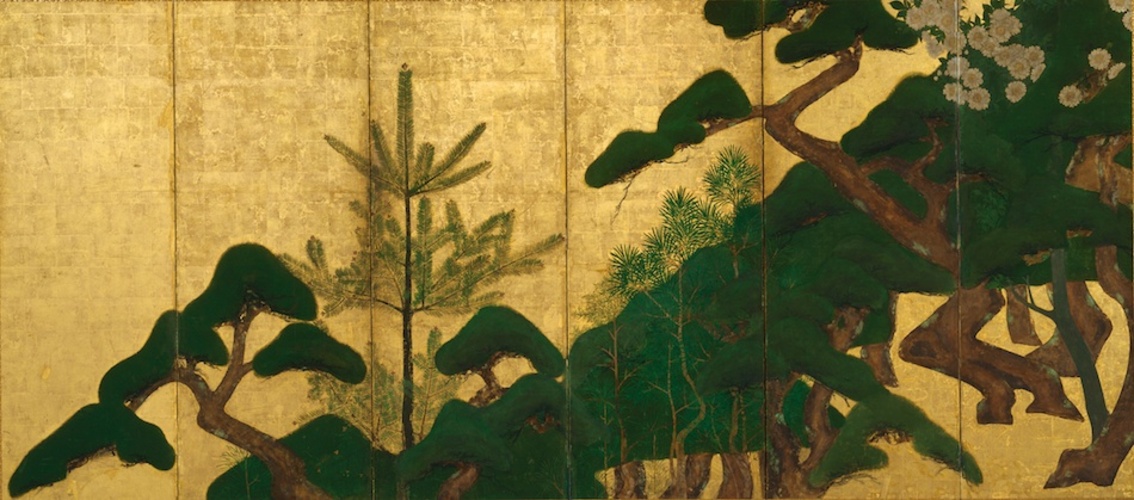
Attributed to Tawaraya Sotatsu Folding Screen with Design of Pine and Cherry Blossoms
Early Edo Period (17th c.)
Color on gold-leaf paper, six-fold screen
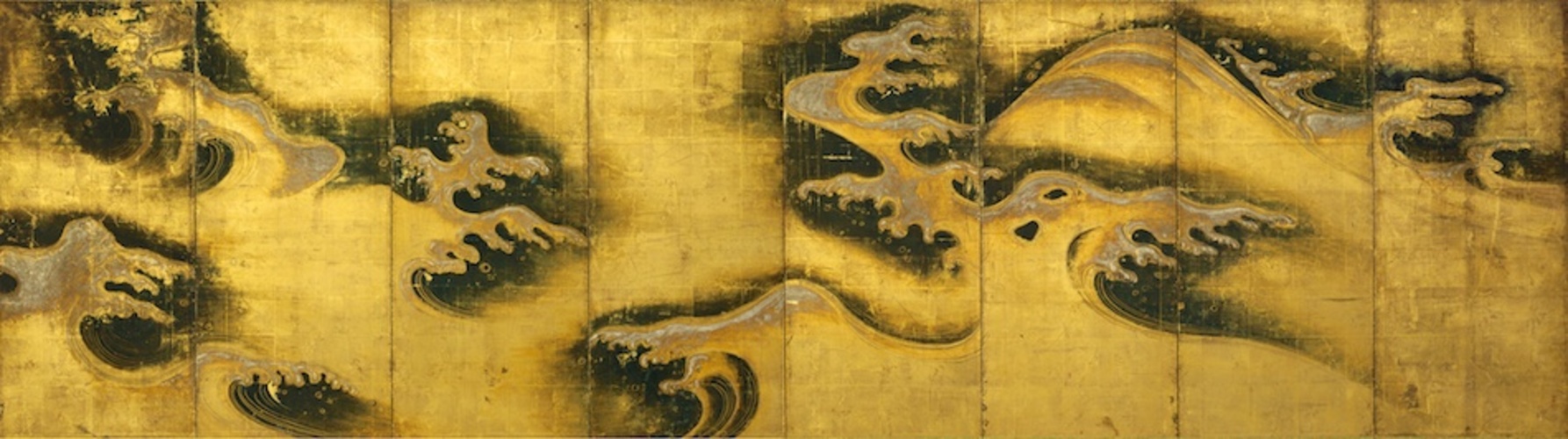
Rinpa School Folding Screen with Design of Rough Sea
Mid Edo Period (18th c.)
Color on gold-leaf paper, eight-fold screen
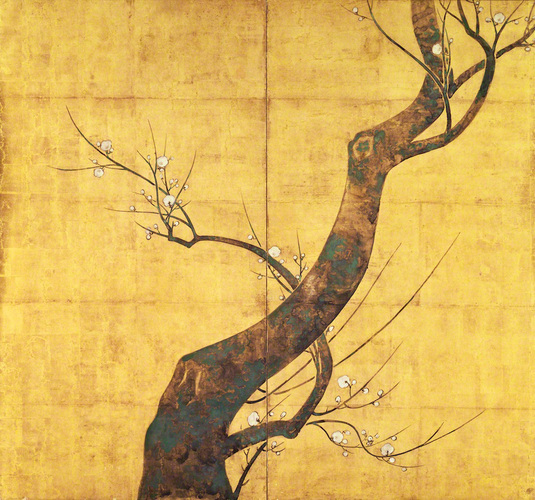
Rinpa School Folding Screen with Design of Plum Tree
Edo Period
Color on gold-leaf paper, two-fold screen
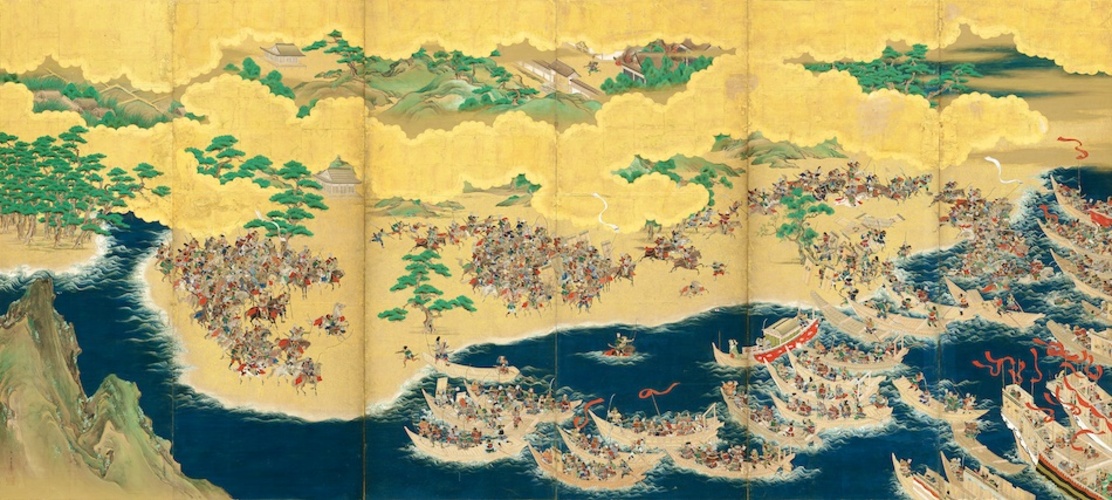
Kaiho Yusetsu Folding Screen with Design of the Scenes from The Battle of the Genji and Heike Clans
Early Edo Period (17th c.)
Color on gold-leaf paper, pair of six-fold screens
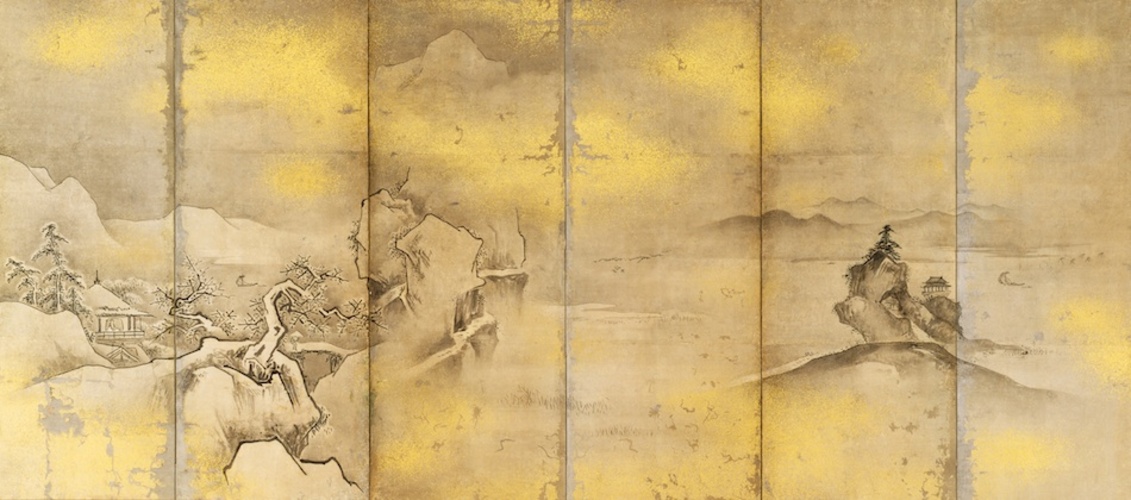
Kano Tsunenobu Folding Screen with Design of Scenery in the Four Seasons
Early Edo Period (17th c.)
Ink on paper, pair of six-fold screens
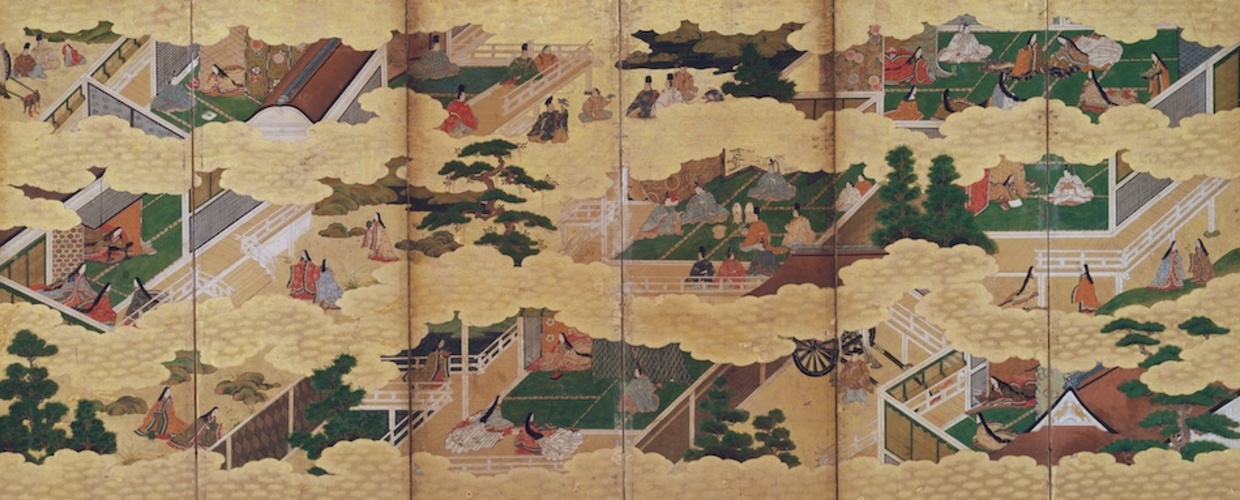
Kano School Folding Screen with Design of the Scenes from the Tale of Genji
Early Edo Period (17th c.)
Color on gold-leaf paper, pair of six-fold screens
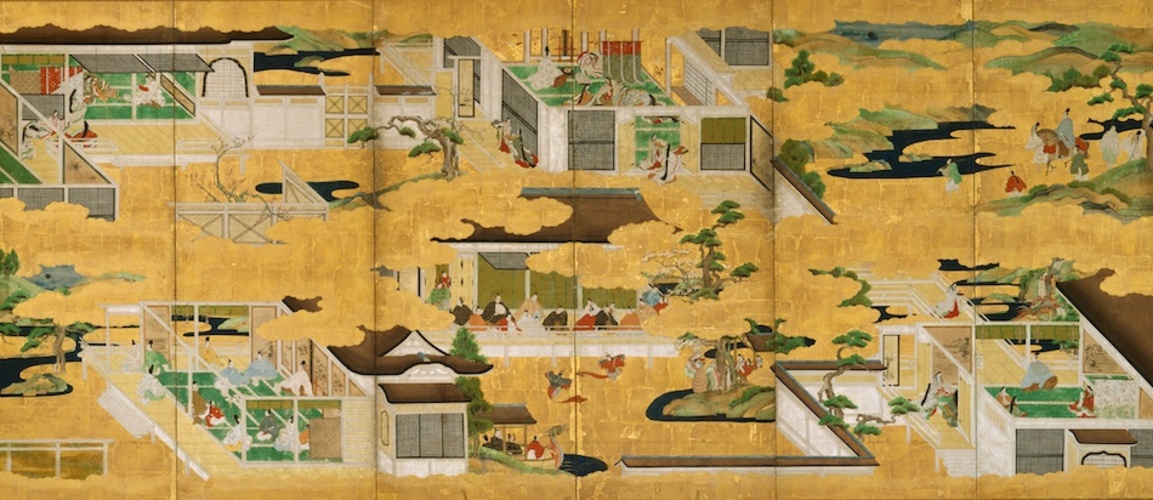
Iwasa School Folding Screen with Design of the Scenes from the Tale of Genji
Early Edo Period (17th c.)
Color on gold-leaf paper, pair of six-fold screens
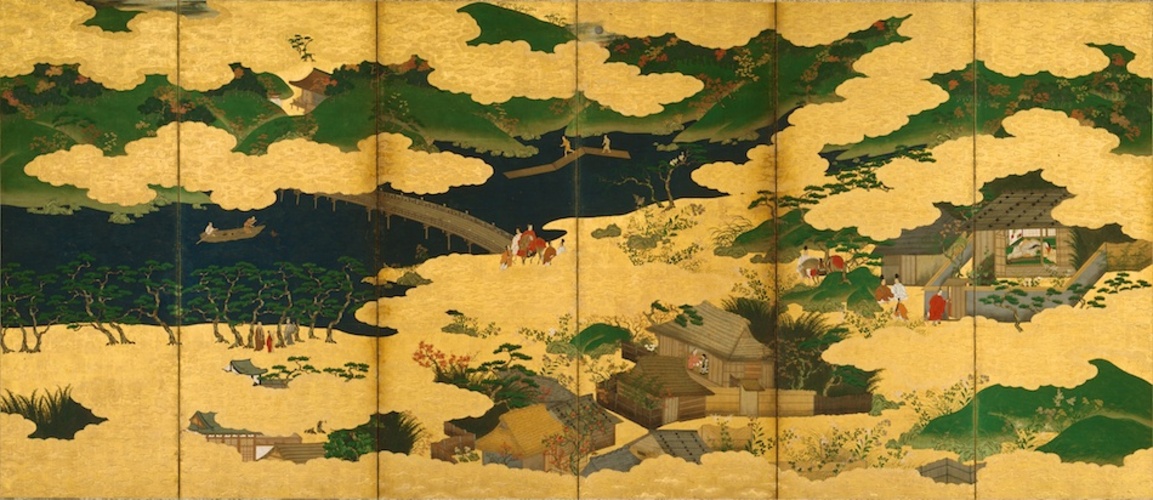
Tosa School Folding Screen with Design of the Scenes from the Tale of Heike – “Ohara-goko” and “Kogo”
Edo Period
Color on gold-leaf paper, pair of six-fold screens
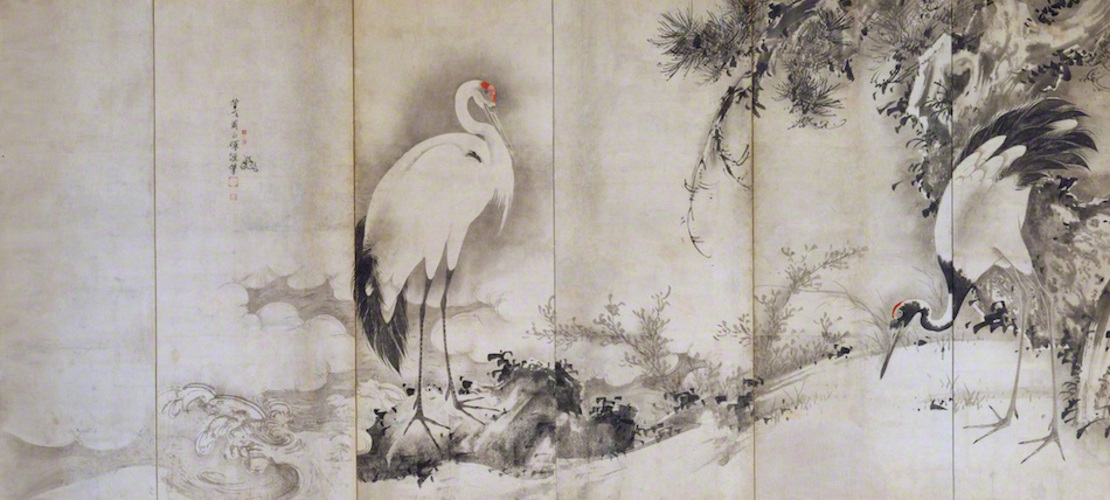
Soga Shohaku Folding Screen with Design of Cranes
Mid Edo Period (18th c.)
Ink and light color on paper, six-fold screen
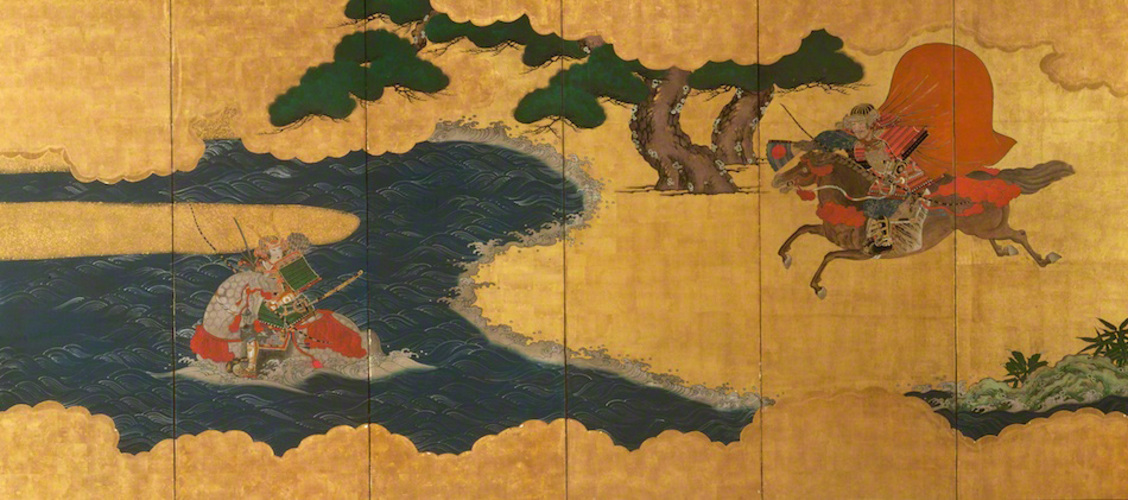
Tosa School Folding Screen with Design of the Battle of Ichinotani
Edo Period
Color on gold-leaf paper, six-fold screen
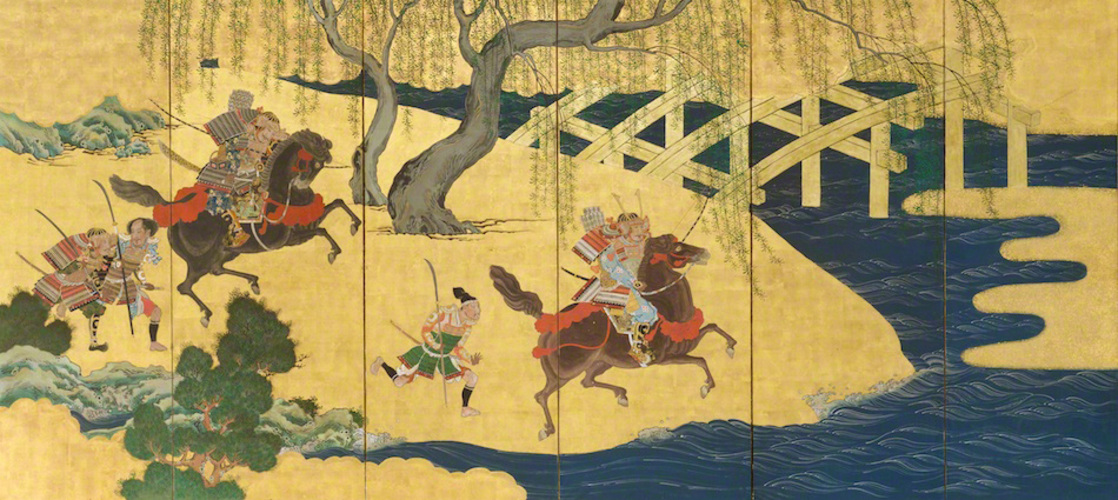
Tosa School Folding Screen with Design of the Battle at Uji River
Edo Period
Color on gold-leaf paper, six-fold screen
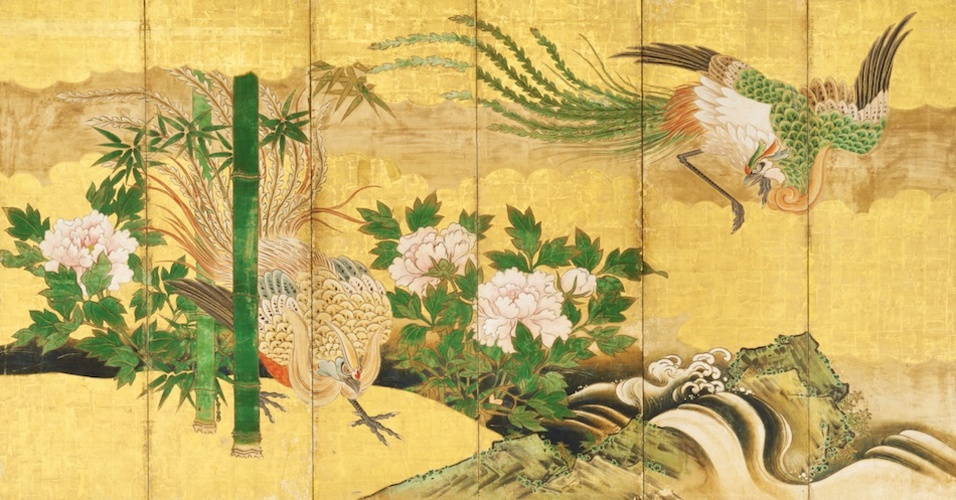
Kano School Folding Screen with Design of Chinese Phoenixes
Edo Period
Color on gold-leaf paper, pair of six-fold screens
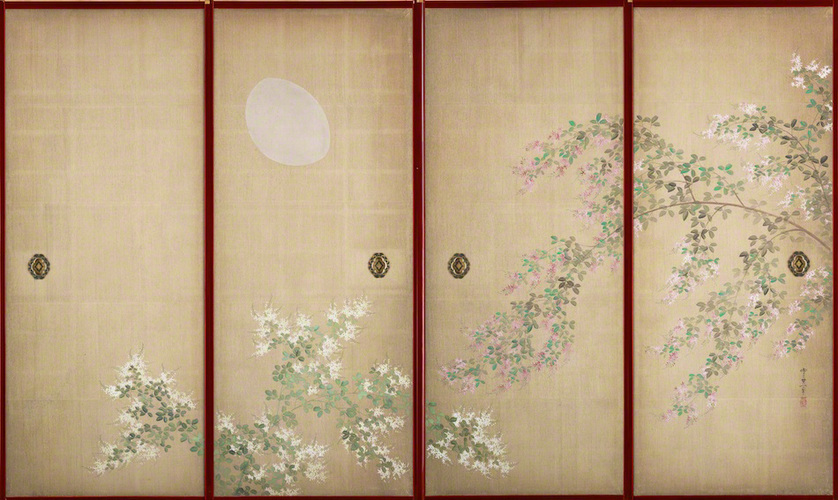
Suzuki Kiitsu Sliding Door with Design of Moon with Bush Clovers
Late Edo Period (19th c.)
Color on silk, four sliding doors
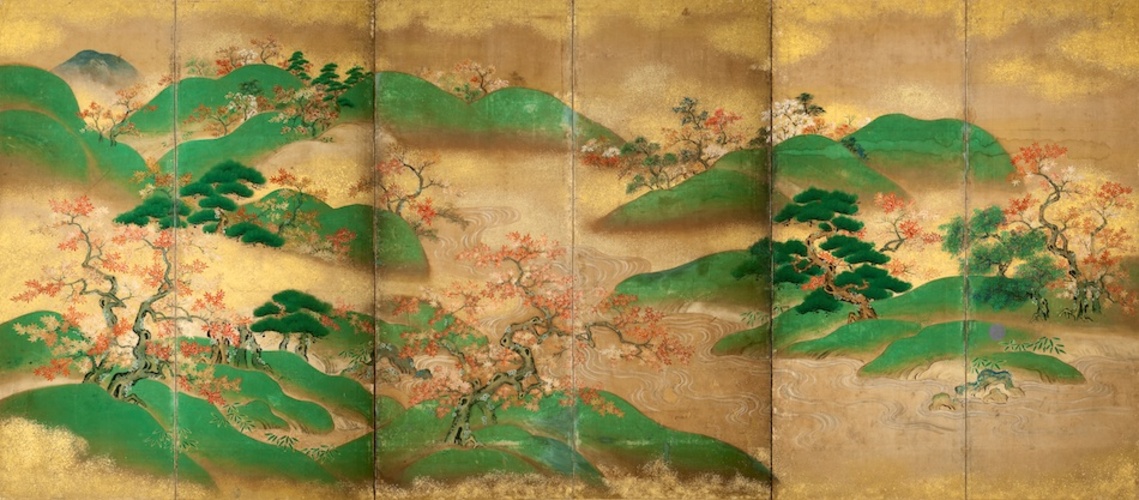
Kano School Folding Screen with Design of Mt. Yoshino and Tatsuta River
Early Edo Period (17th c.)
Color on paper, pair of six-fold screens
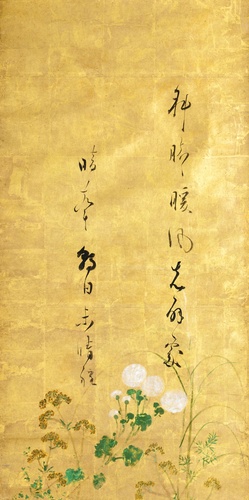
Calligraphy: Attributed to Hon’ami Koetsu (1558-1637), Painting: Sotatsu School Chinese Poem from ‘Wakan-Roeishu,’ Anthology of Japanese and Chinese Poetry, with Design of Flowering Grasses
Early Edo Period (17th c.)
Ink and color on gold-leaf paper, hanging scroll
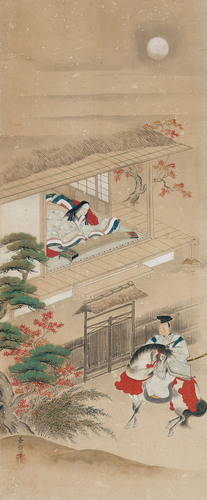
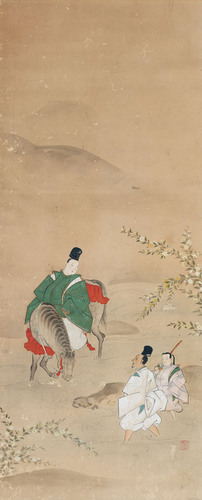
Kano Masunobu Yearning for a Loved One
Early Edo Period (17th c.)
Color on paper, hanging scroll
Kano Masunobu Tama River in Ide
Early Edo Period (17th c.)
Color on paper, hanging scroll
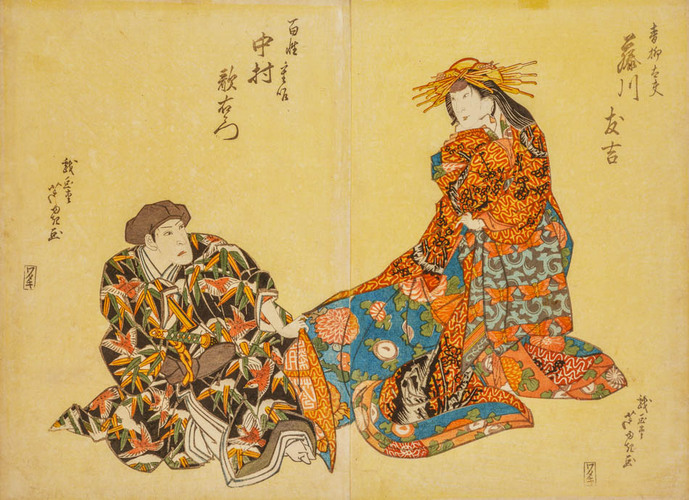
Gigado Ashiyuki The Actors Fujikawa Tomokichi as Aoyagi Dayu and Nakamura Utaemon III as the Peasant Jusaku
1828 (Bunsei 11)
Color woodblock print on paper (diptych)
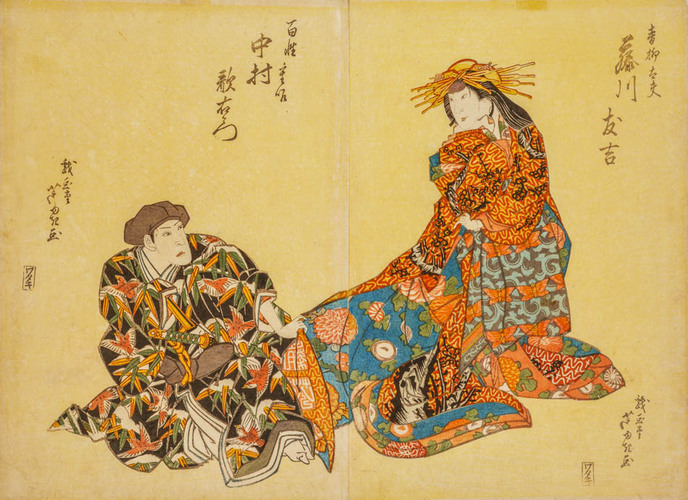
Gigado Ashiyuki The Actors Fujikawa Tomokichi as Aoyagi Dayu and Nakamura Utaemon III as the Peasant Jusaku
1828 (Bunsei 11)
Color woodblock print on paper (diptych)
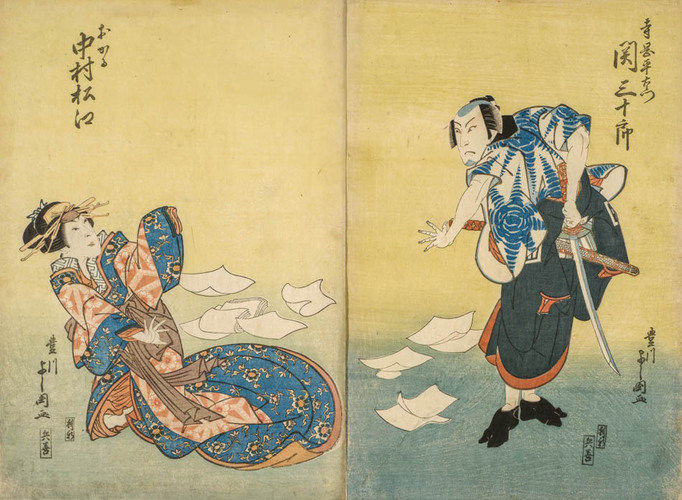
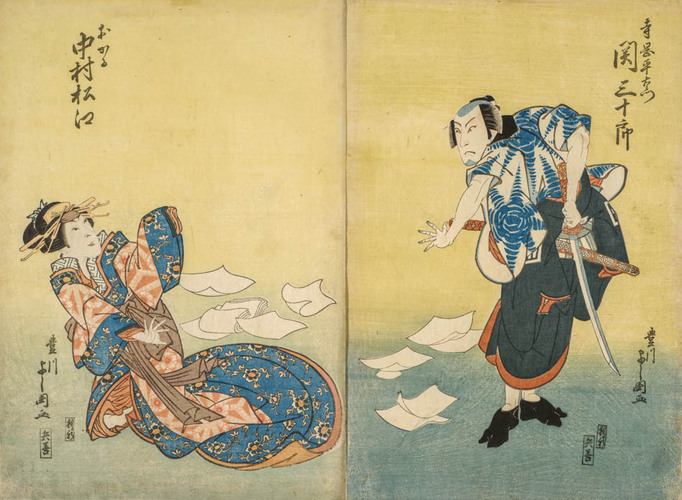
Jukodo Yoshikuni The Actors Seki Sanjuro II as Teraoka Heiemon and Nakamura Matsue III as Okaru
1827 (Bunsei 10)
Color woodblock print on paper (diptych)
Jukodo Yoshikuni The Actors Seki Sanjuro II as Teraoka Heiemon and Nakamura Matsue III as Okaru
1827 (Bunsei 10)
Color woodblock print on paper (diptych)
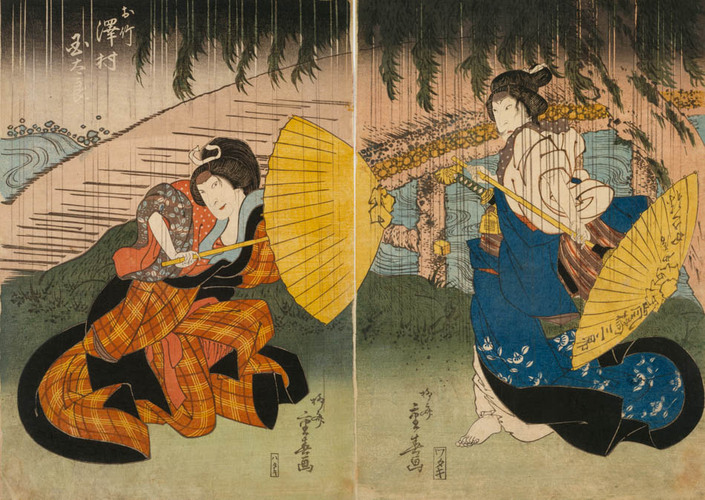
Ryusai Shigeharu The Actors Arashi Kitsusaburo as Wife Kasane and Sawamura Kunitaro II as Otake
1828 (Bunsei 11)
Color woodblock print on paper (diptych)
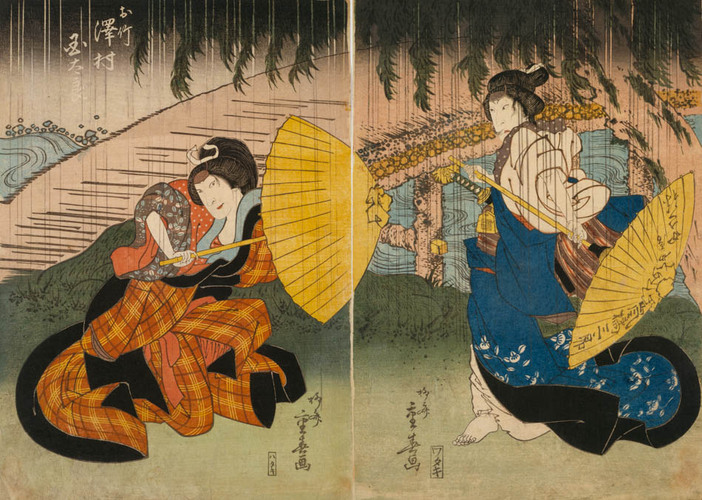
Ryusai Shigeharu The Actors Arashi Kitsusaburo as Wife Kasane and Sawamura Kunitaro II as Otake
1828 (Bunsei 11)
Color woodblock print on paper (diptych)
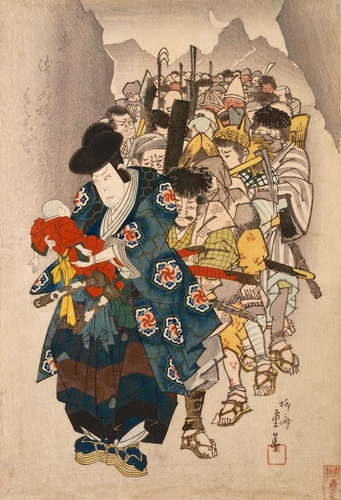
Ryusai Shigeharu The Actor Nakamura Utaemon III as Jiraiya
1832 (Tenpo 3)
Color woodblock print on paper
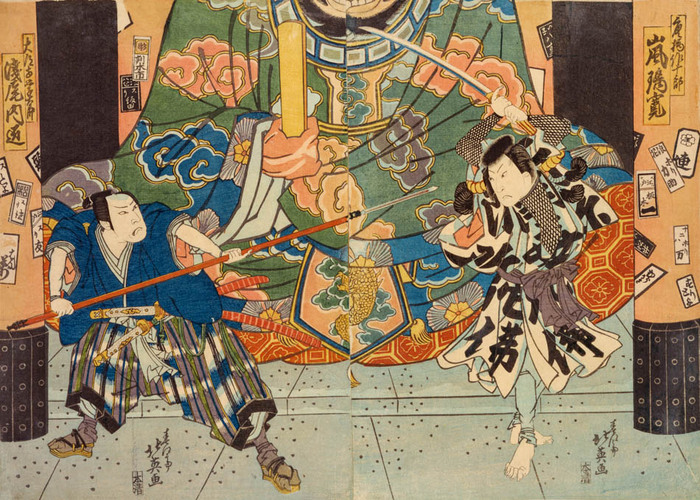
Shunbaisai Hokuei The Actors Arashi Rikan II as Karahashi Sakujuro and Asao Takumi as Daidoji Gakutaro
1831 (Tenpo 2)
Color woodblock print on paper (diptych)
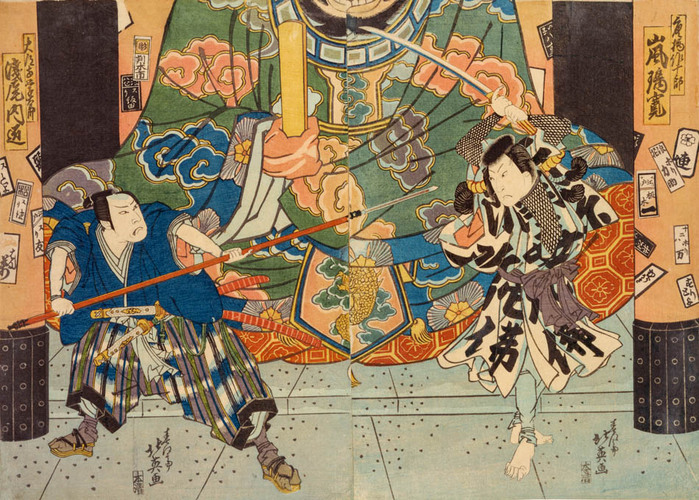
Shunbaisai Hokuei The Actors Arashi Rikan II as Karahashi Sakujuro and Asao Takumi as Daidoji Gakutaro
1831 (Tenpo 2)
Color woodblock print on paper (diptych)
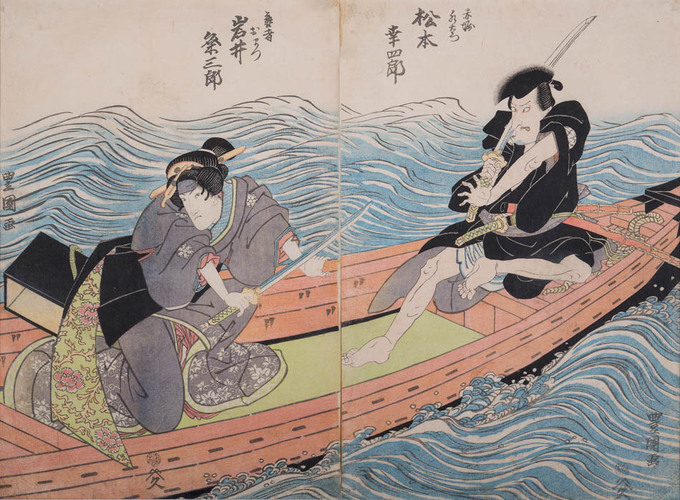
Utagawa Toyokuni The Actors Matsumoto Koshiro V as Akahori Mizuemon and Iwai Kumesaburo as the Geisha Omatsu
1823 (Bunsei 6)
Color woodblock print on paper (diptych)
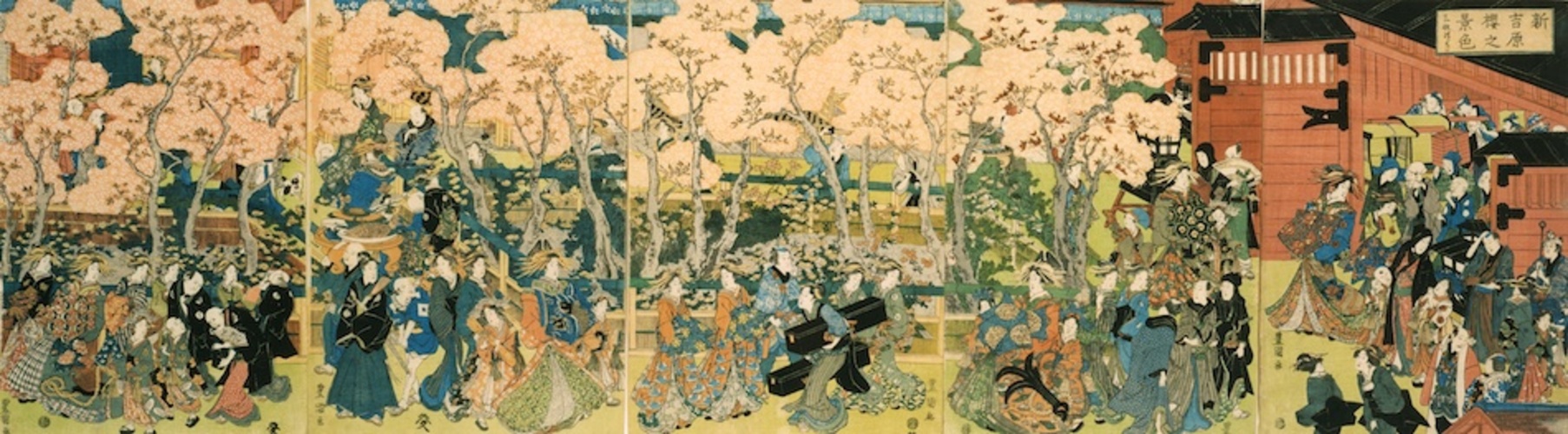
Utagawa Toyokuni Cherry Blossoms in the Shin-Yoshiwara Courtesan’s District
1818-30 (Bunsei era)
Color woodblock print on paper (pentaptych)
Utagawa Toyokuni III(Utagawa Kunisada) The Actors Nakamura Shikan II as the Mansarvant Kajihei, later Shiozawa Tanzo, Segawa Kikunojo V as Kajihei's Wife Tsukisayo, Mimasu Gennosuke as Ikazuchi Tsurunosuke
1829 (Bunsei 12)
Color woodblock print on paper (triptych)
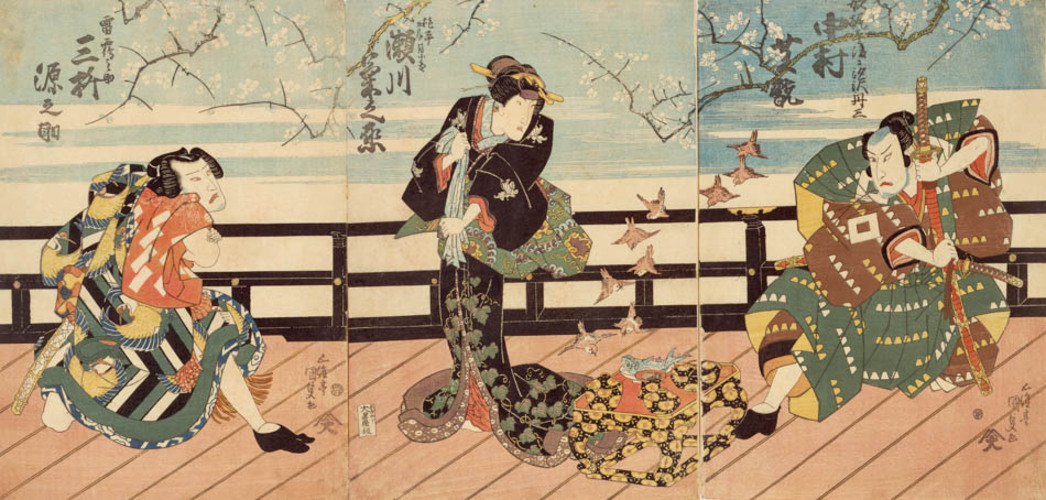
Keisai Eisen Enjoying the Cool Evening Breeze on the Ryogoku Bridge in Edo
1830-44 (Tenpo era)
Color woodblock print on paper (triptych)
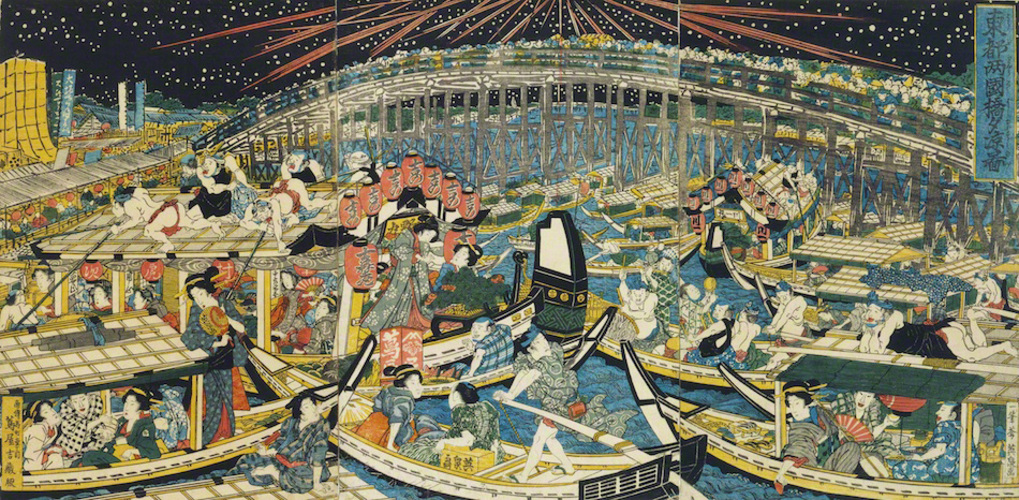
Utagawa Kuniyasu The Actor Sawamura Tossho as Ono no Tofu and the Actor Kataoka Ichizo as Tokko no Daroku
1832 (Tenpo 3)
Color woodblock print on paper (diptych)
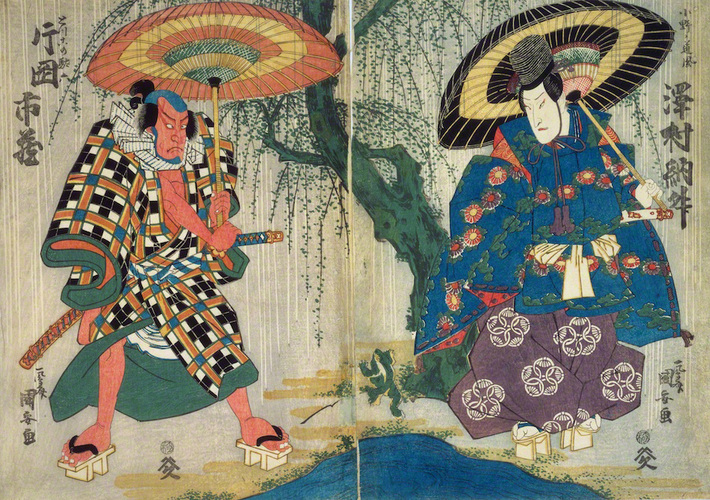
Utagawa Kuniyoshi The Battle at Uji River
1831-32
Color woodblock print on paper (triptych)
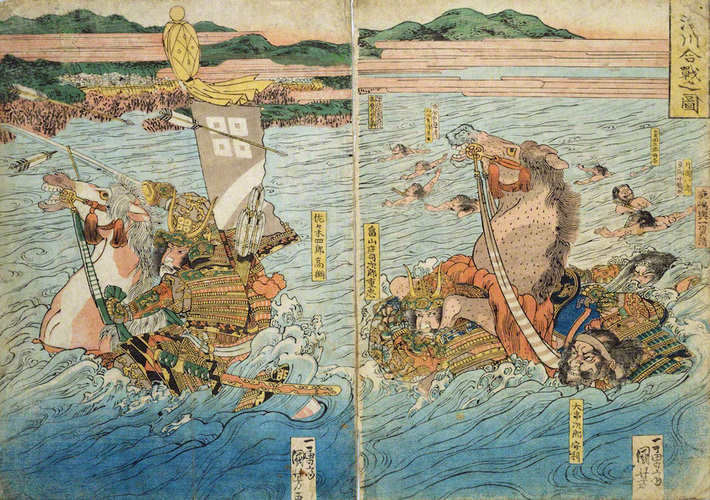
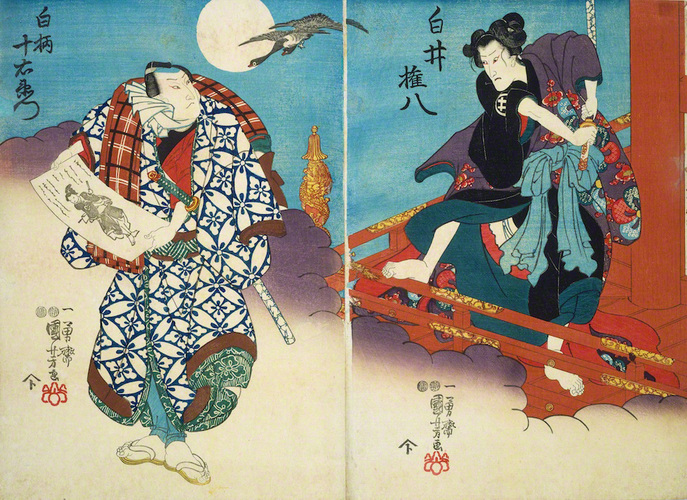
Utagawa Kuniyoshi The Actor Ichikawa Danjuro as Shirai Gonpachi and the Actor Sawamura Sojuro as Shirae Juemon
1847 (Koka 4)
Color woodblock print on paper (diptych)
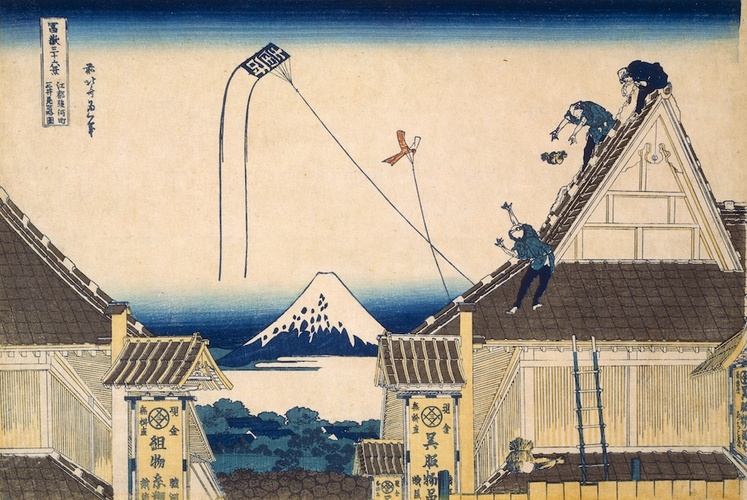
Katsushika Hokusai Thirty-six Views of Mount Fuji: Mitsui Store at Suruga-cho in Edo
c. 1830-32(Tenpo 1-3)
Color woodblock print on paper
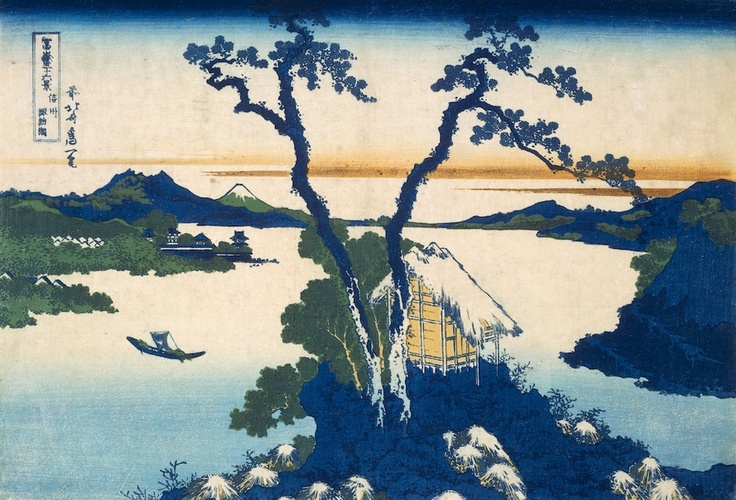
Katsushika Hokusai Thirty-six Views of Mount Fuji: Lake Suwa in Shinano Province
c. 1830-32(Tenpo 1-3)
Color woodblock print on paper
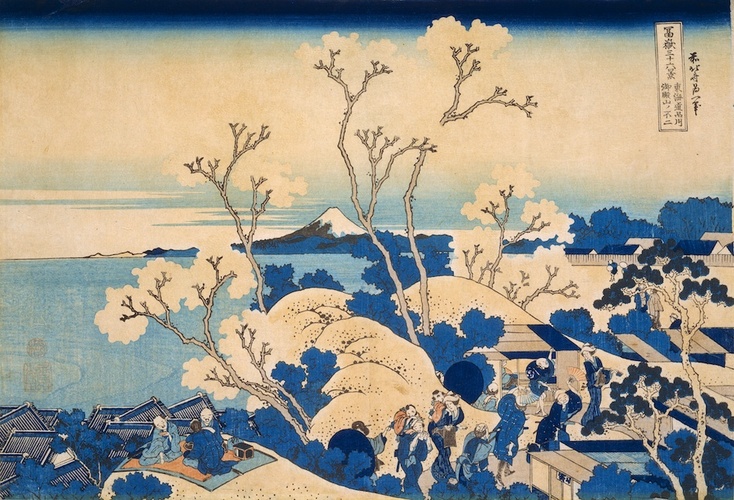
Katsushika Hokusai Thirty-six Views of Mount Fuji: Mt. Fuji from Gotenyama Hill in Shinagawa on the Tokaido
c. 1830-32(Tenpo 1-3)
Color woodblock print on paper
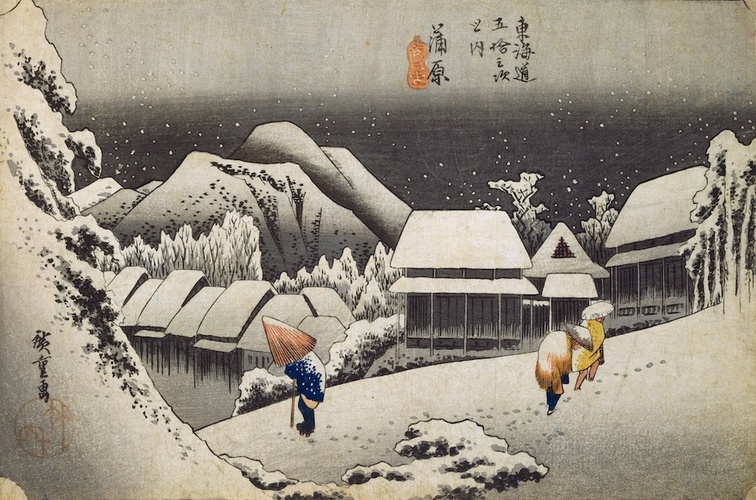
Utagawa Hiroshige Fifty-three Stations on the Tokaido: Night Snow at Kanbara
1833-34 (Tenpo 4-5)
Color woodblock print on paper
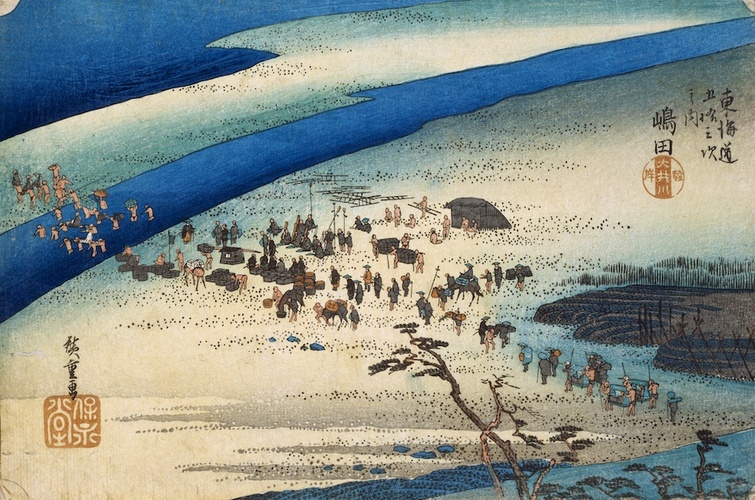
Utagawa Hiroshige Fifty-three Stations on the Tokaido: Suruga Bank of the Oi River at Shimada
1833-34 (Tenpo 4-5)
Color woodblock print on paper
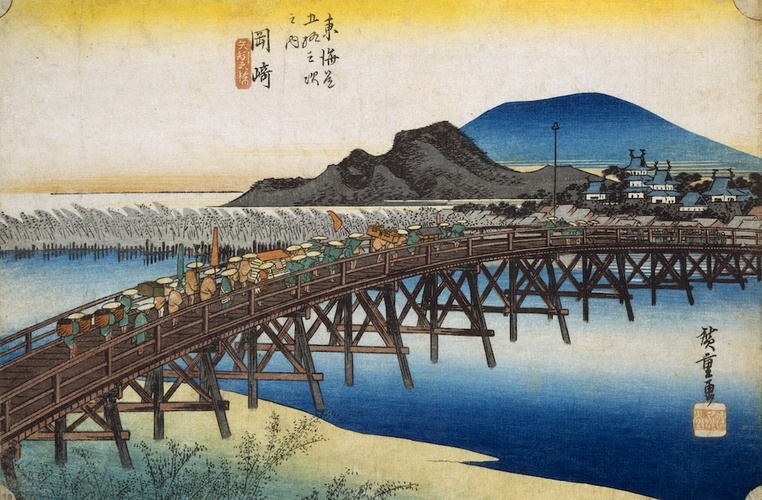
Utagawa Hiroshige Fifty-three Stations on the Tokaido: Yahagi Bridge at Okazaki
1833-34 (Tenpo 4-5)
Color woodblock print on paper
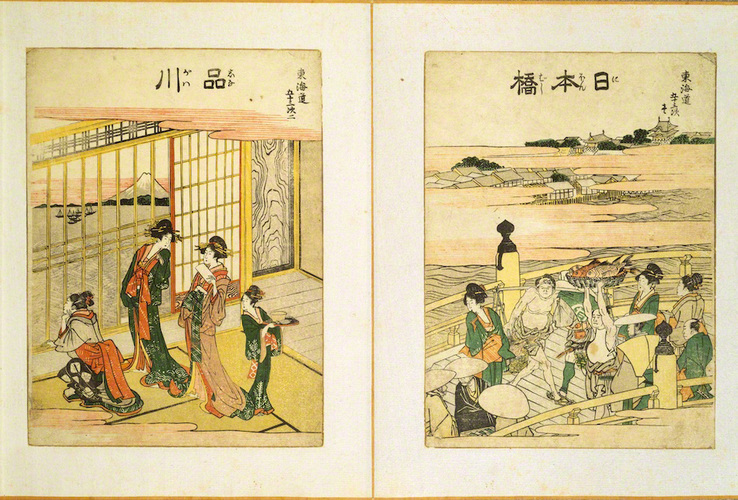
Katsushika Hokusai Fifty-three Stations on the Tokaido: Illustrated Book of Ekiro-no-Suzu
c. 1810
Color woodblock print on paper, book illustrations
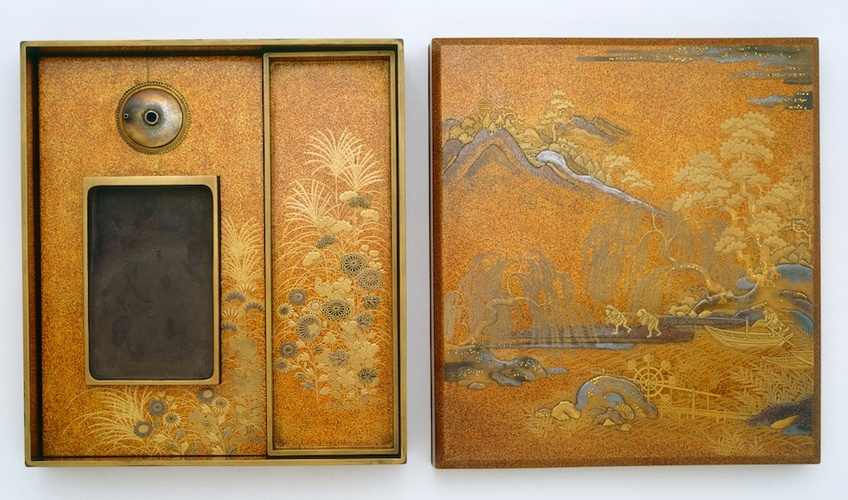
Writing Box with Design of Willow, Bridge and Waterwheel in Maki-e Lacquer
Mid-Late Edo Period (18-19th c.)
Lacquered wood
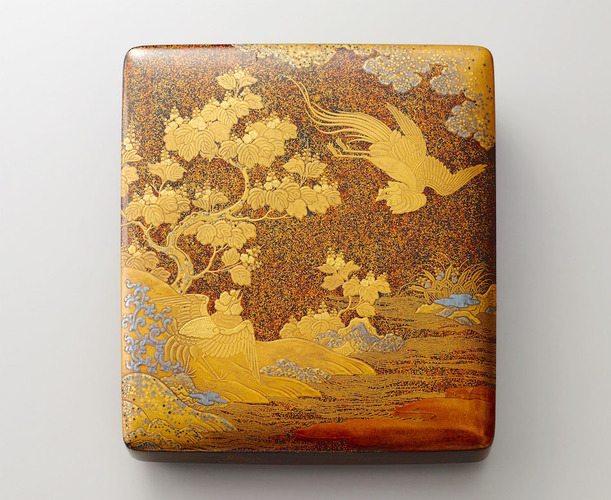
Writing Box with Design of Paulownia and Phoenix in Maki-e Lacquer
Momoyama-Edo Period (17th c.)
Lacquered wood
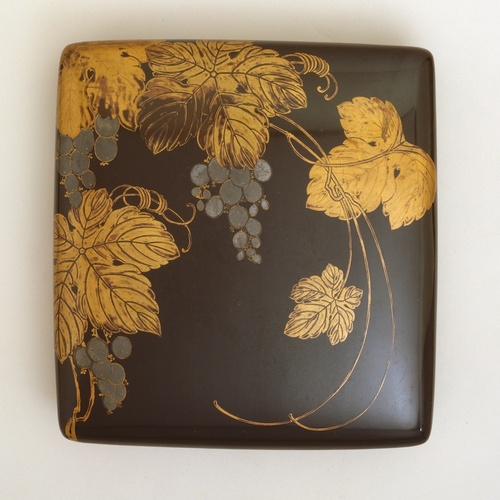
Writing Box with Design of Grapes and Eulalia in Maki-e Lacquer
Mid Edo Period (18th c.)
Lacquered wood
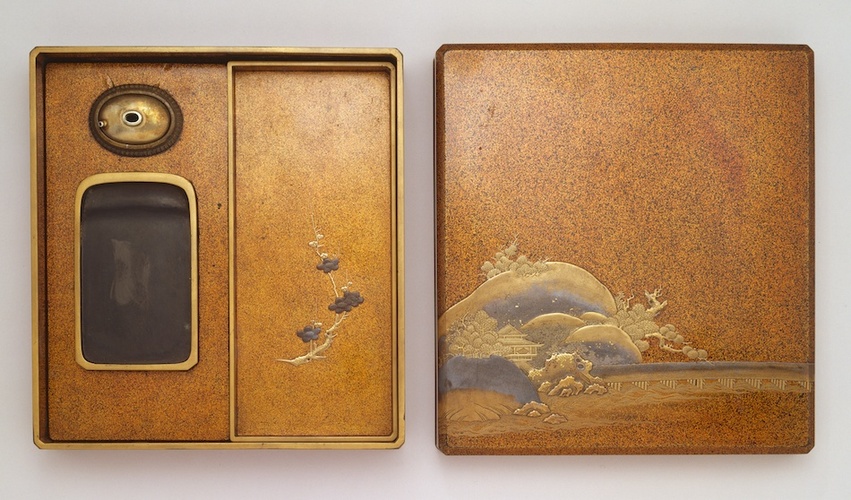
Writing Box with Design of Landscape in Maki-e Lacquer
Early-Mid Edo Period (17-18th c.)
Lacquered wood
Writing Box with Design of Tanzaku Papers and Chrysanthemums in Maki-e and Mother-of-Pearl Inlay
Taisho-Showa Period (20th c.)
Lacquered wood
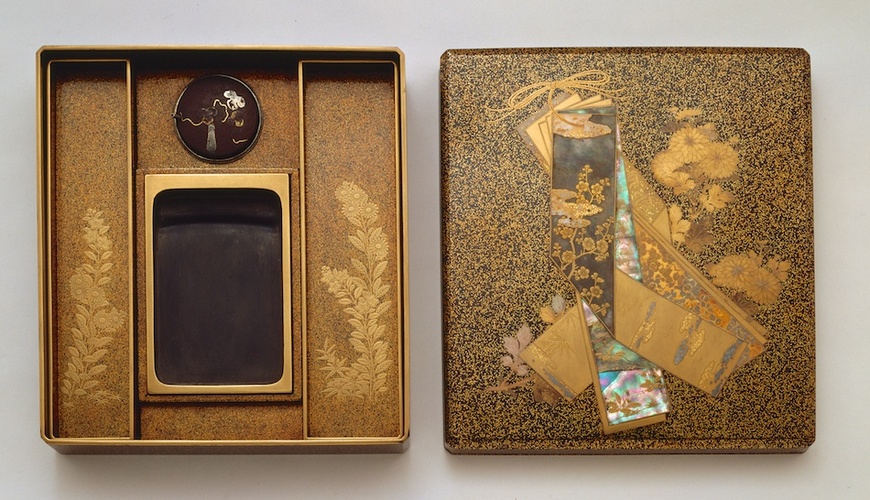
Zohiko Writing Box with Design of the Scene from “Hatsune” Chapter of the Tale of Genji in Maki-e Lacquer
20th c.
Lacquered wood
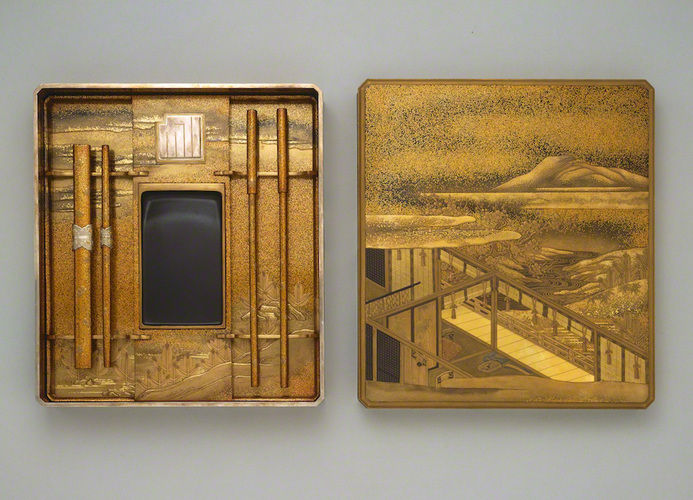
Zohiko Writing Desk with Design of the Scene from “Hatsune” Chapter of the Tale of Genji in Maki-e Lacquer
20th c.
Lacquered wood
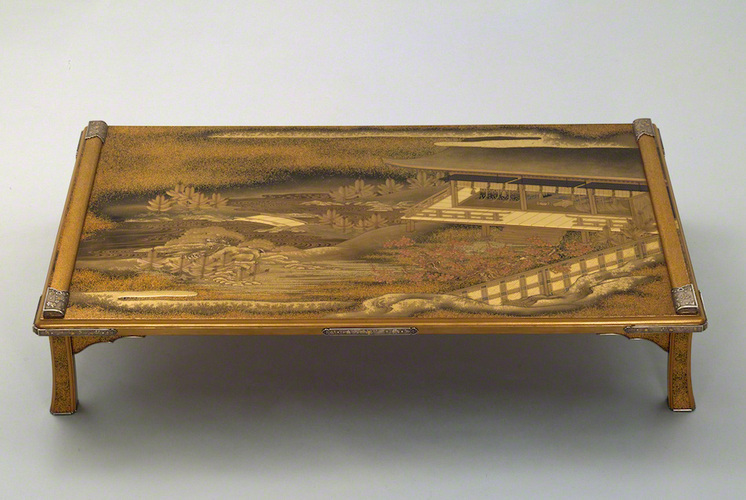
Writing Box with Design of Hozu River in Maki-e Lacquer
Showa Period (20th c.)
Lacquered wood
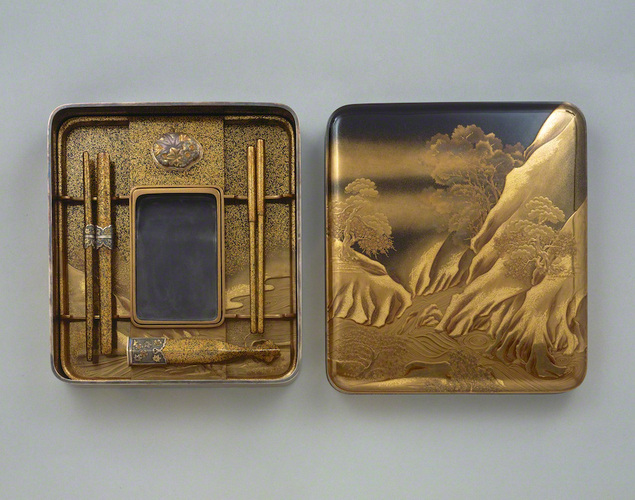
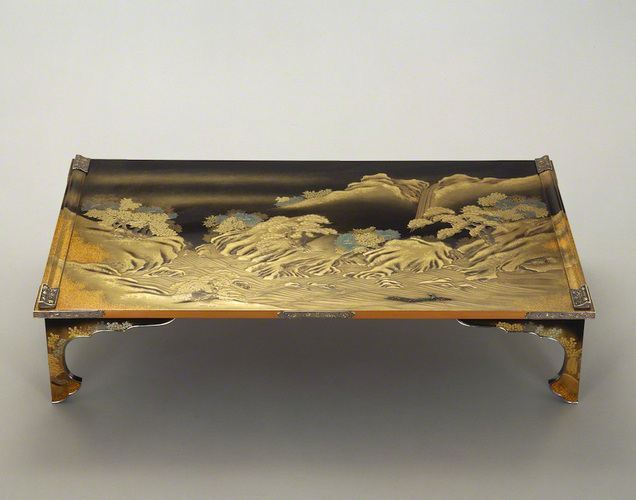
Writing Desk with Design of Hozu River in Maki-e Lacquer
Showa Period (20th c.)
Lacquered wood
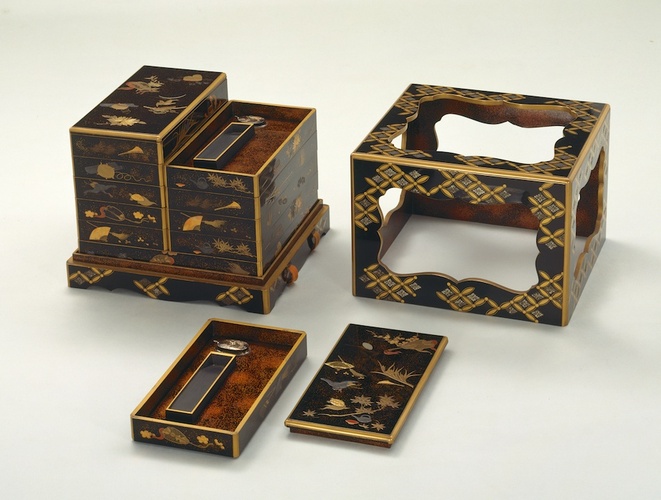
Set of Ten Writing Boxes with Casket with Design of Auspicious Patterns in Maki-e Lacquer
Edo Period
Lacquered wood
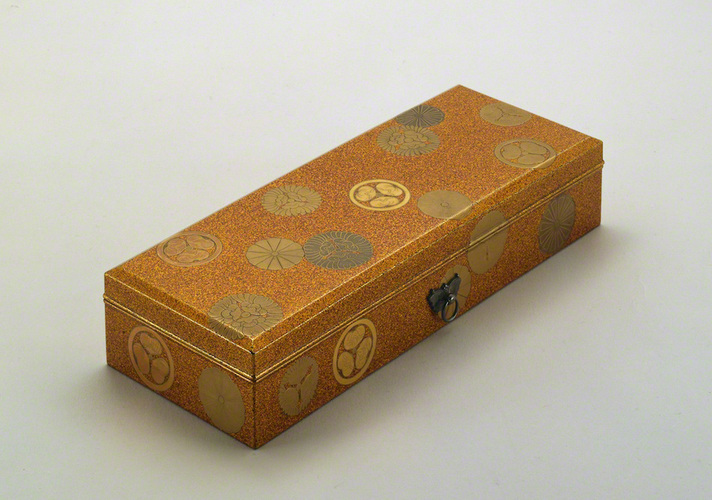
Letter Box with Design of Scattered Crests in Maki-e Lacquer
Late Edo Period (19th c.)
Lacquered wood
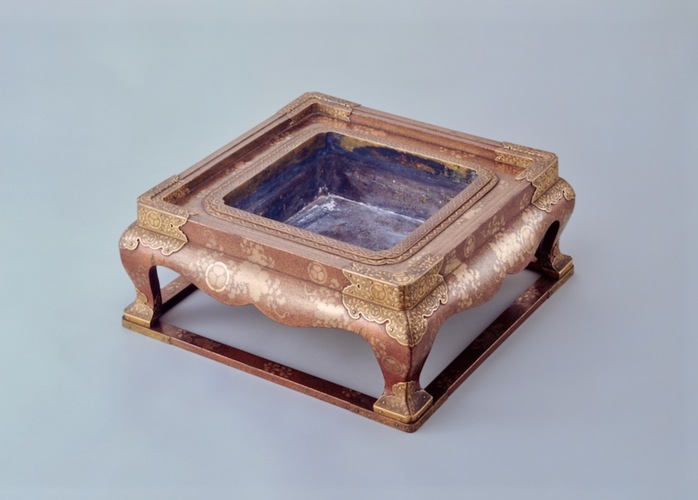
Square Goten-Hibachi Brazier with Design of Peony in Maki-e Lacquer
Edo Period
Lacquered wood
Picnic Box with Design of Plum, Rice-Ear, and Chrysanthemum in Maki-e Lacquer
Mid-Late Edo Period (18-19th c.)
Lacquered wood
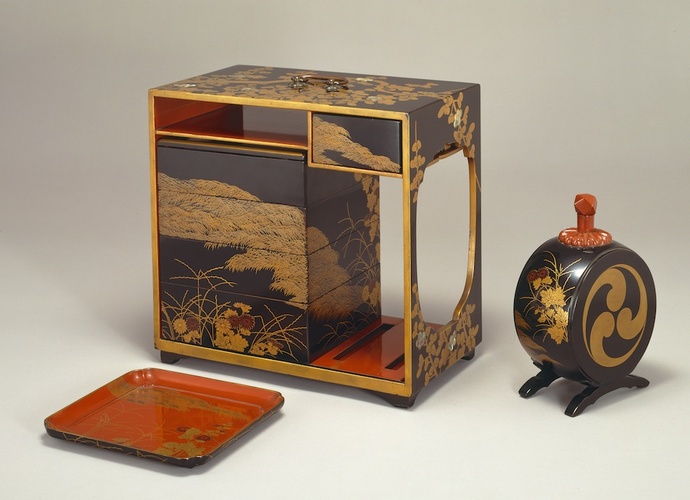
Armrest with Design of Fans in Maki-e Lacquer
Early-Mid Edo Period (17-18th c.)
Lacquered wood
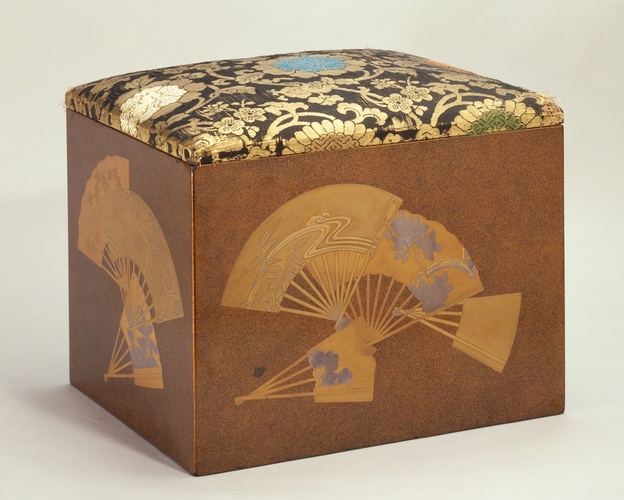
Used by Mune Hime (Princess Mune) The Date Family’s Palanquin with Arabesque Design in Maki-e Lacquer
Mid Edo Period (18th c.)
Lacquered wood
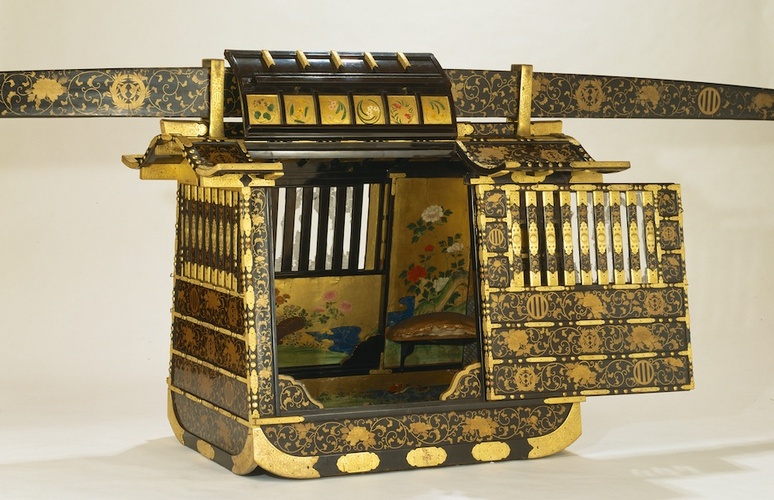
Kawakami Kangetsu Inro (Medicine Case) with Design of Scattered Fans in Maki-e Lacquer
Meiji-Taisho Period (19-20th c.)
Lacquered wood
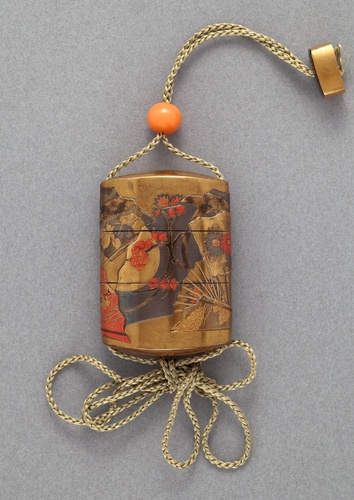
Kajikawa Inro (Medicine Case) with Design of Noh Play “Shakkyo” in Maki-e Lacquer
Late Edo Period (19th c.)
Lacquered wood
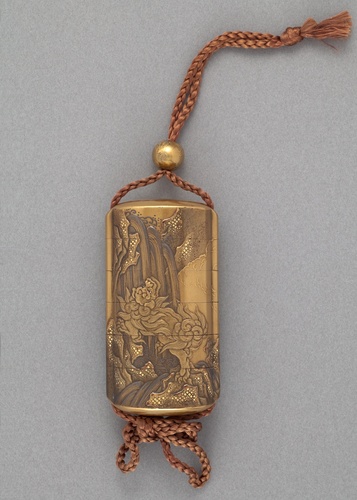
Shibayama Inro (Medicine Case) with Design of Hawk and Pine Tree in Maki-e Lacquer
Meiji Period (19th c.)
Lacquered wood
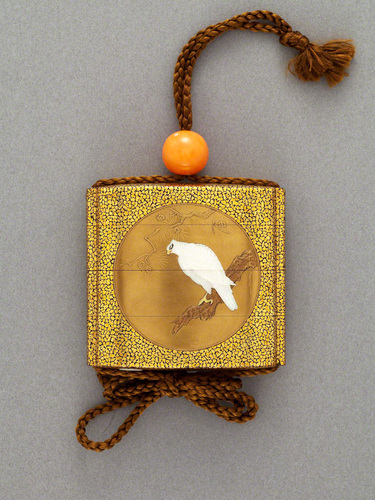
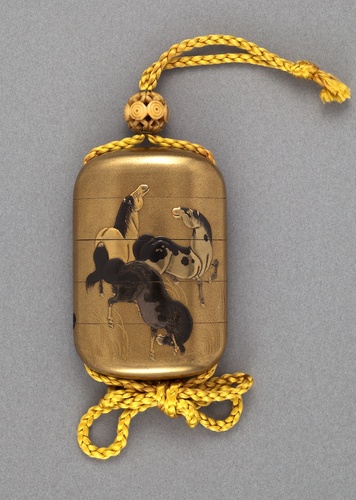
Shiomi Masanari Inro Medicine Case with Design of Horses in Maki-e Lacquer
Mid Edo Period (18th c.)
Lacquered wood
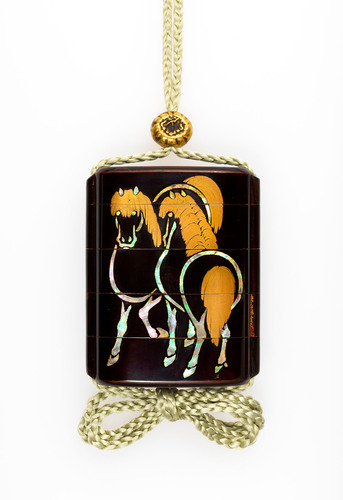
Ishii Utokusai Inro Medicine Case with Design of Noh Dance in Maki-e Lacquer
End of Edo Period (19th c.)
Lacquered wood
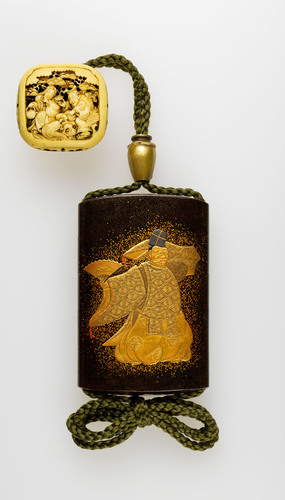
Shokasai Inro (Medicine Case) with Design of Horses in Maki-e Lacquer
Edo-Meiji Period (19th c.)
Lacquered wood
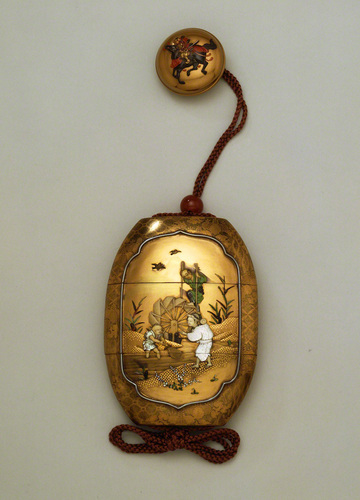
Shibayama Inro (Medicine Case) with Design of Waterwheel in Maki-e and Mother-of-Pearl Inlay
Meiji Period (19th c.)
Lacquered wood
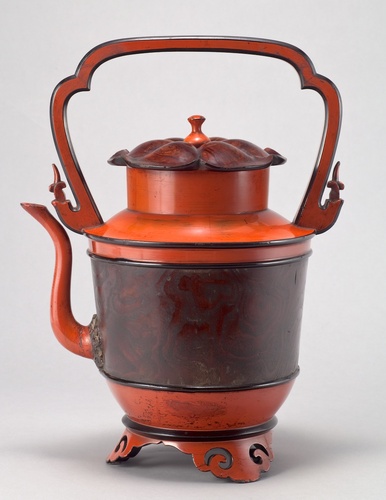
Negoro Style Hot-Water Pot
Early Edo Period (17th c.)
Lacquered wood
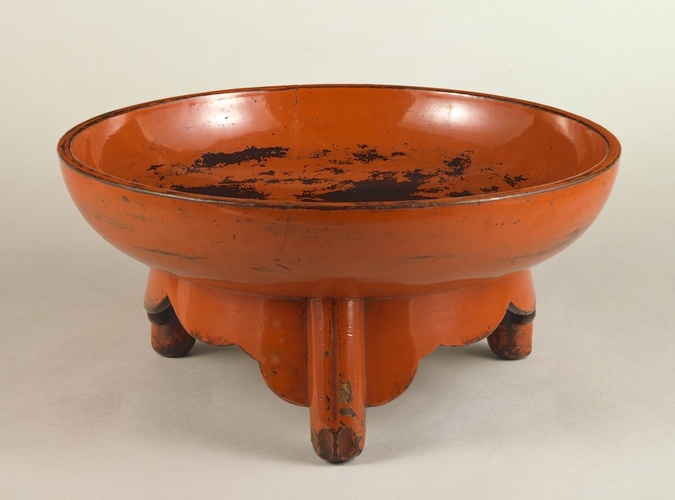
Negoro Style Three Footed Bowl
Early Edo Period (17th c.)
Lacquered wood
Worn by Shimazu Nariakira Suit of Armor in O-yoroi Style
Late Edo Period (19th c.)
Iron, silk, leather, reed, lacquer, copper
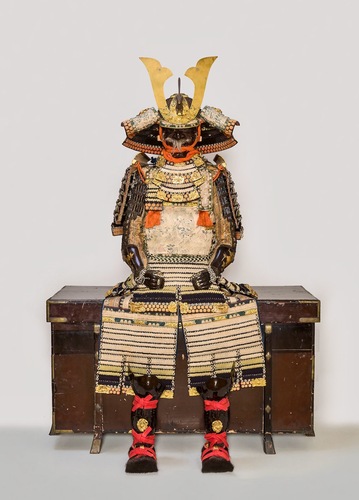
Worn by Oguri Kozukenosuke Tadamasa Suit of Armor in Gomaido Gusoku Style
August 1862
Iron, leather, silk, lacquer
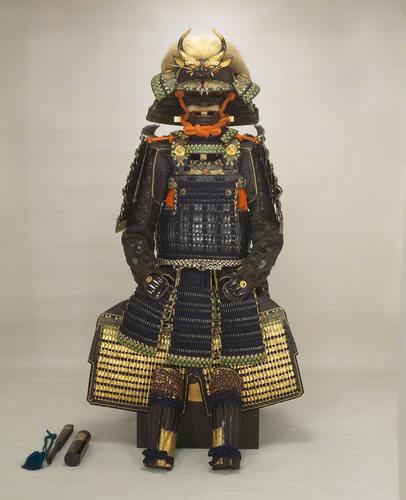
Signed on kabuto helmet: Suifuki Yoshinori; handed down in the Todo Family Suit of Armor in Okegawado Gusoku Style with Todo Crest
Late Edo Period (19th c.)
Iron, leather, silk, lacquer
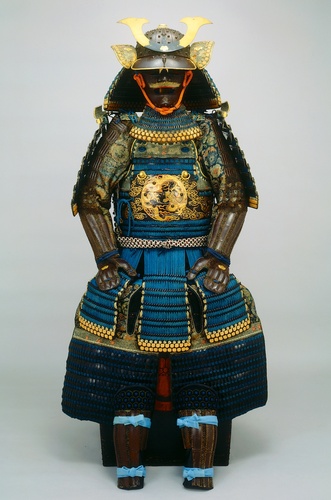
Suit of Armor in Brown and Gold Laced Domaru Style
Mid Edo Period (18th c.)
Iron, leather, silk, lacquer, copper
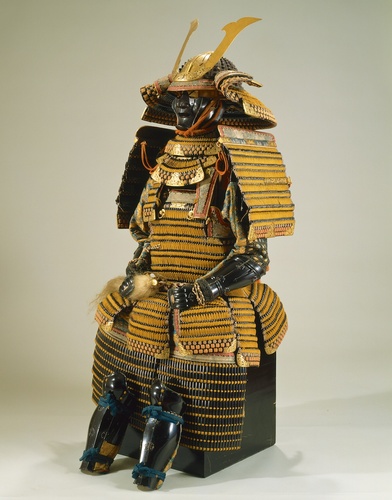
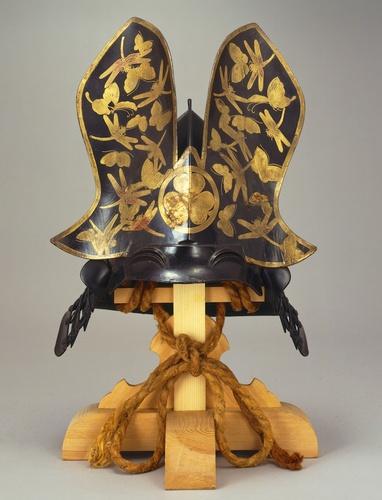
Fancy Helmet with Tokugawa Clan Crest and Design of Butterflies and Dragonflies
Mid Edo Period (18th c.)
Leather, iron, lacquer, maki-e, silk
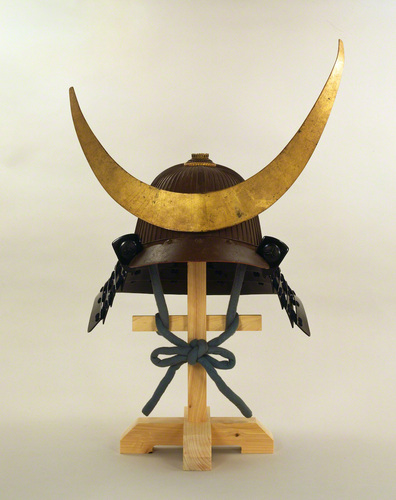
Signed Joushu-ju Saotome Ienari Sixty-two Plate Riveted Suji Kabuto Helmet, with Crescent Moon Shaped Maedate
Momoyama-Early Edo Period (16-17th c.)
Iron, silk, copper
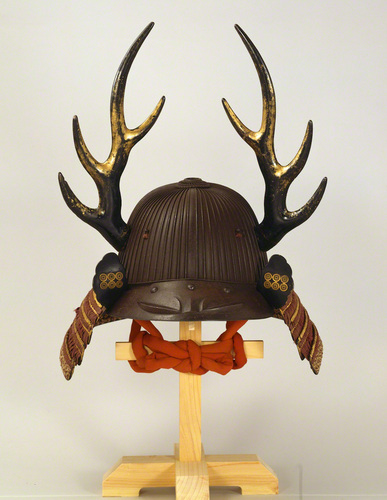
Signed Saotome Iechika Sixty-two Plate Riveted Suji Kabuto Helmet, with Deer Horn Shaped Wakidate
Momoyama-Early Edo Period (16-17th c.)
Iron, silk, wood
Kabuto Helmet with Visor in the Namban Style
Early Edo Period (17th c.)
Iron, silk, copper
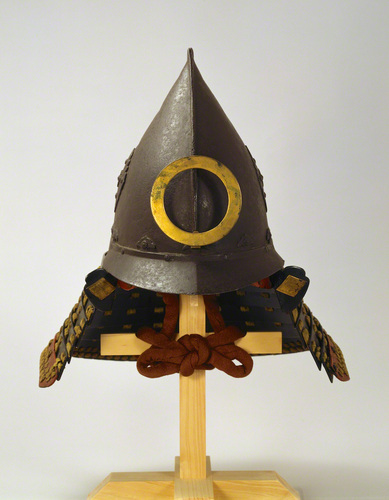
Harikake Kabuto Helmet with Chinese-style Headdress
Mid Edo Period (18th c.)
Iron, papier-mache, lacquer, silk, wooden board
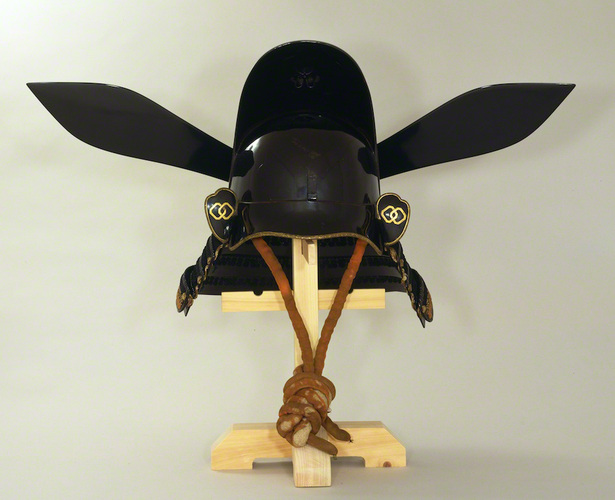
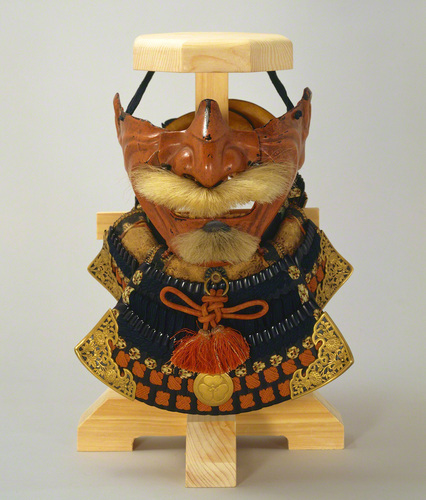
Face Guard (So-menpo)
Mid Edo Period (18th c.)
Hardened leather, iron, lacquer, silk
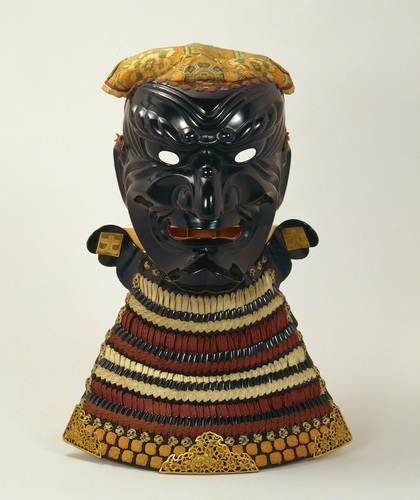
Face Guard (Shirohige Ressei-menpo)
Mid Edo Period (18th c.)
Iron, lacquer, leather, silk, copper
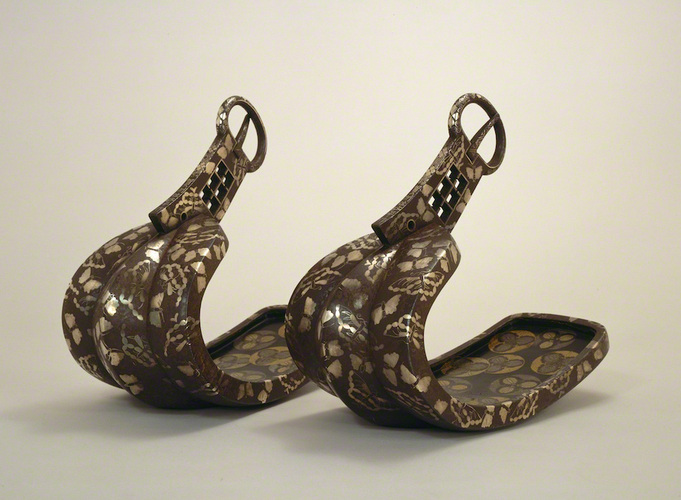
Signed Gashu-ju Masahira Saku Stirrups with Design of Butterfly and Chinese Flowers
Mid Edo Period (18th c.)
Iron with maki-e and silver inlay
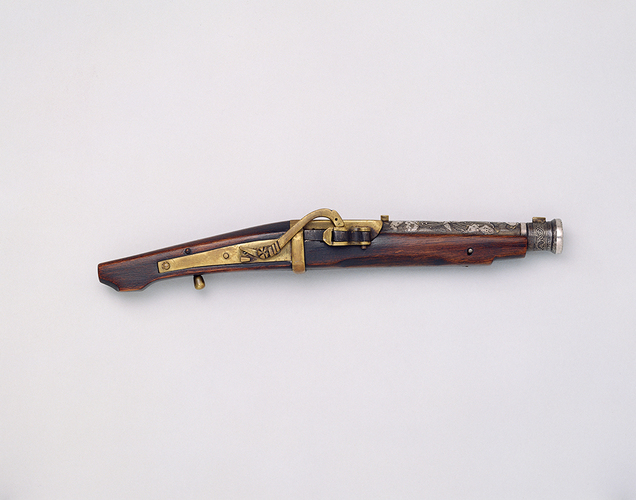
Matchlock Gun: Unsigned
Mid-Edo Period (18th C.)
Iron
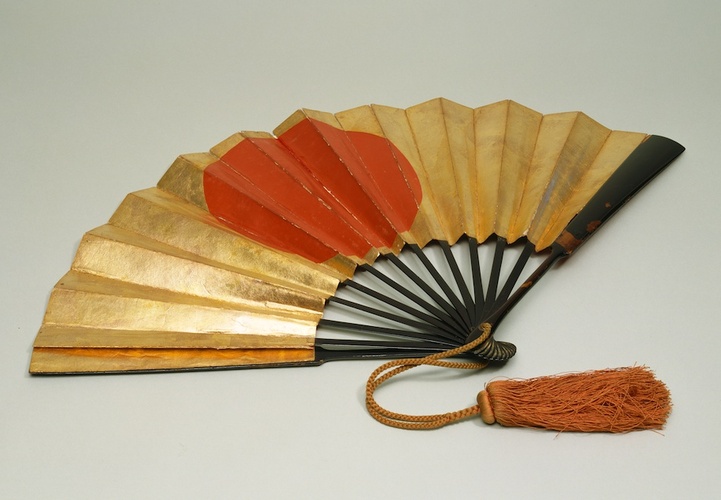
Commander’s Folding Fan Lacquered in Black
Late Edo Period (19th c.)
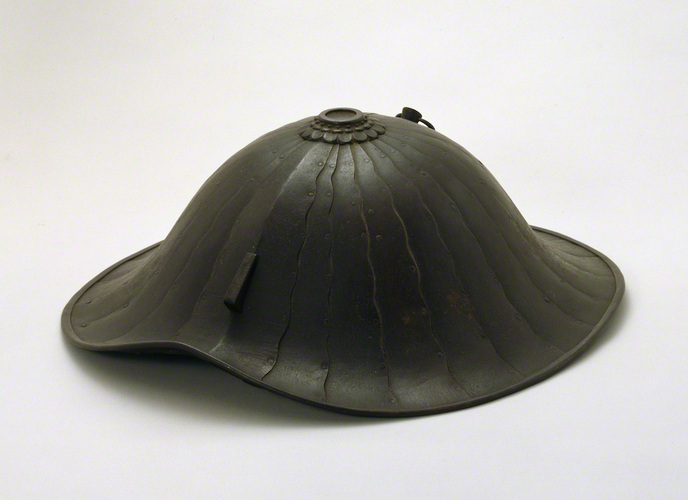
Signed Myochin Munenori Twenty-four Ken Jingasa Hat
Mid Edo Period (18th c.)
Iron
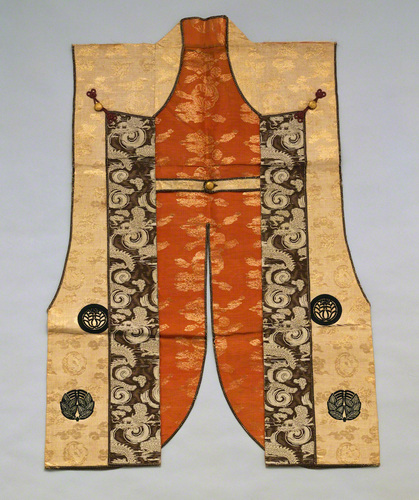
(Presumably) handed down in the Nabeshima family Jin-baori, Battle Surcoat (with the motifs of dragons and clouds, and the crests of the Nabeshima clan)
Mid Edo Period (18th c.)
Silk
Attributed to Sukezane Tachi: Unsigned
Tachi: Bizen Province, Mid-Kamakura Period (13th C.) / Fittings: Early Edo Period (17th C.)
Iron, forged
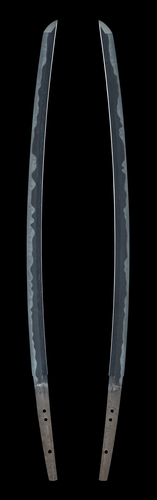
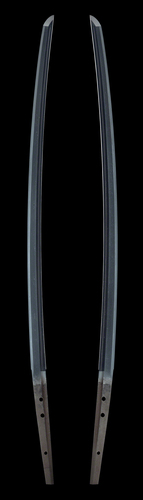
Attributed to Taima Katana: Unsigned
Yamato Province, Late Kamakura Period (14th C.)
Iron, forged
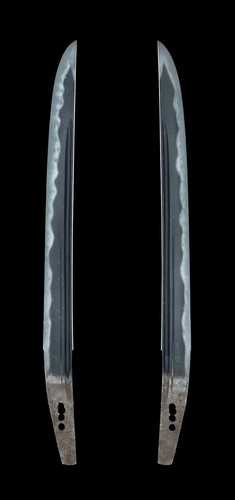
Attributed to Yukimitsu Tanto: Unsigned
Sagami Province, End of Kamakura Period (14th C.)
Iron, forged
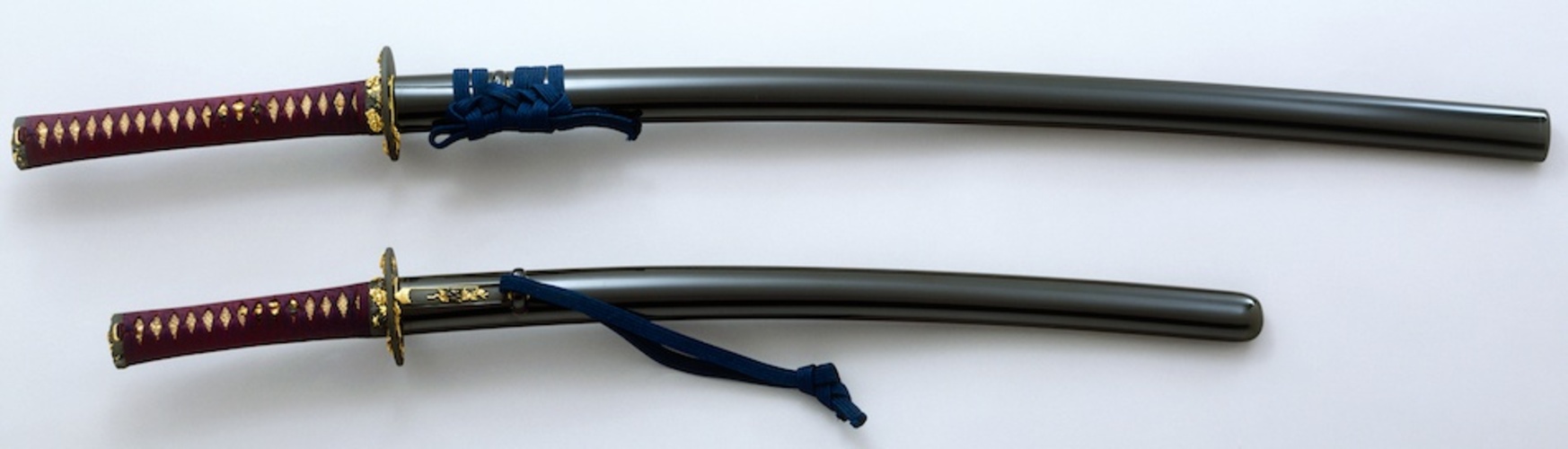
[Tsuba, Fuchigashira, Menuki] Ishiguro Masayoshi [Kozuka, Kogai] Yanagawa Naomasa Black Waxed Scabbards with Sword Fittings [Tsuba, Fuchigashira, Menuki] Signed Ishiguro Masayoshi Saku [Kozuka, Kogai] Signed Yanagawa Naomasa Saku
Late Edo Period (19th C.)
Katsushika Hokusai Fifty-three Stations on the Tokaido: Illustrated Book of Ekiro-no-Suzu
c. 1810
Color woodblock print on paper, book illustrations
Jean-François Millet Retrospective
Exhibition period Sunday, November 3 - Sunday, December 8, 1991
Yamanashi Prefectural Museum of Art (Yamanashi, Japan)